Complete Denture
Call Us Today
What are complete dentures?
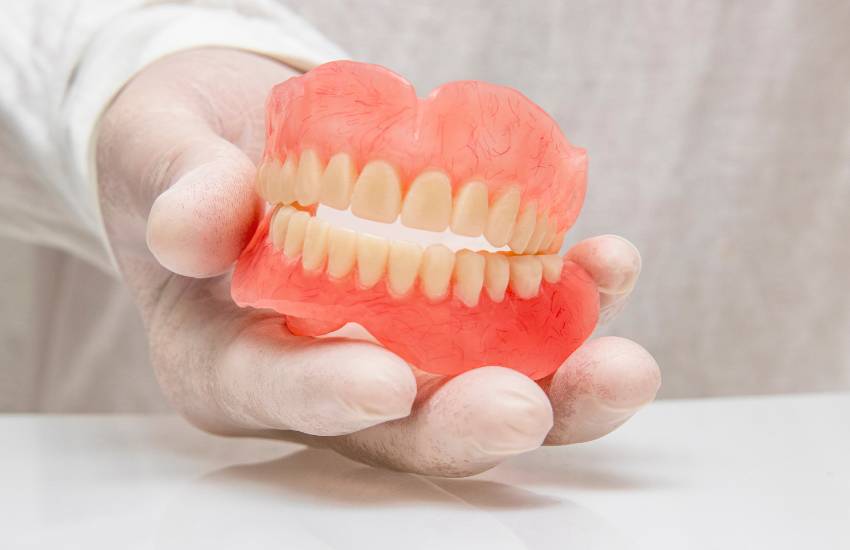
Complete dentures, are a removable device that can be used to replace missing teeth. The denture teeth can be made out of porcelain or acrylic and are held together by an acrylic base. Partial dentures are similar but instead only fill the gaps of missing teeth, while a complete denture is a replacement for the full set.
Complete dentures may be needed when you lose all of your teeth and they can help fill out your smile, and leave you feeling more confident.
Types of complete dentures
1. Normal Acrylic Denture:
Made of normal acrylic material which give a stander strength and reliability
Age old material used from very long time
2. Titanium alloy Denture:
As compare to all the dentures titanium alloy denture is not so popular because of its price and material maintenance
Mess is used fabricated with acrylic material which gives good form and strength
3. Soft-liner Denture:
Soft liner is a resilient material used at the aria where the denture delivers load on to the bone. It provides a question type which help in observing the biting forces delivers
4. BPS Denture:
Known as bio-functional prosthetic system denture.
If an top most quality denture with perfect fit and best comfort almost looks like natural teeth
It makes the patients talk and speak comfortably even on wearing the dentures.
Abet costlier compare to other type of denture materials.
Benefits of complete dentures
Improved chewing function.
Enhanced appearance.
Improved speech function.
Better nutrition (due to improved chewing function).
What happens during a complete denture consultation?
A dentist will examine your mouth, including your jaws, gums and any remaining teeth. They’ll also take dental X-rays to check the thickness of your jawbone.
If your dentist determines that you’re eligible for dentures, they’ll discuss your denture options with you. The denture that’s right for you depends on several factors, including:
- Your personal preferences.
- How many teeth you’re missing.How long your teeth have been missing.
- Whether you prefer a removable or nonremovable appliance.
- The density and volume of your jawbone.
- The relationship between your upper and lower jaws.